


Help Secure Enright for the Salmonberry Trail
Campaign goal: $670,000
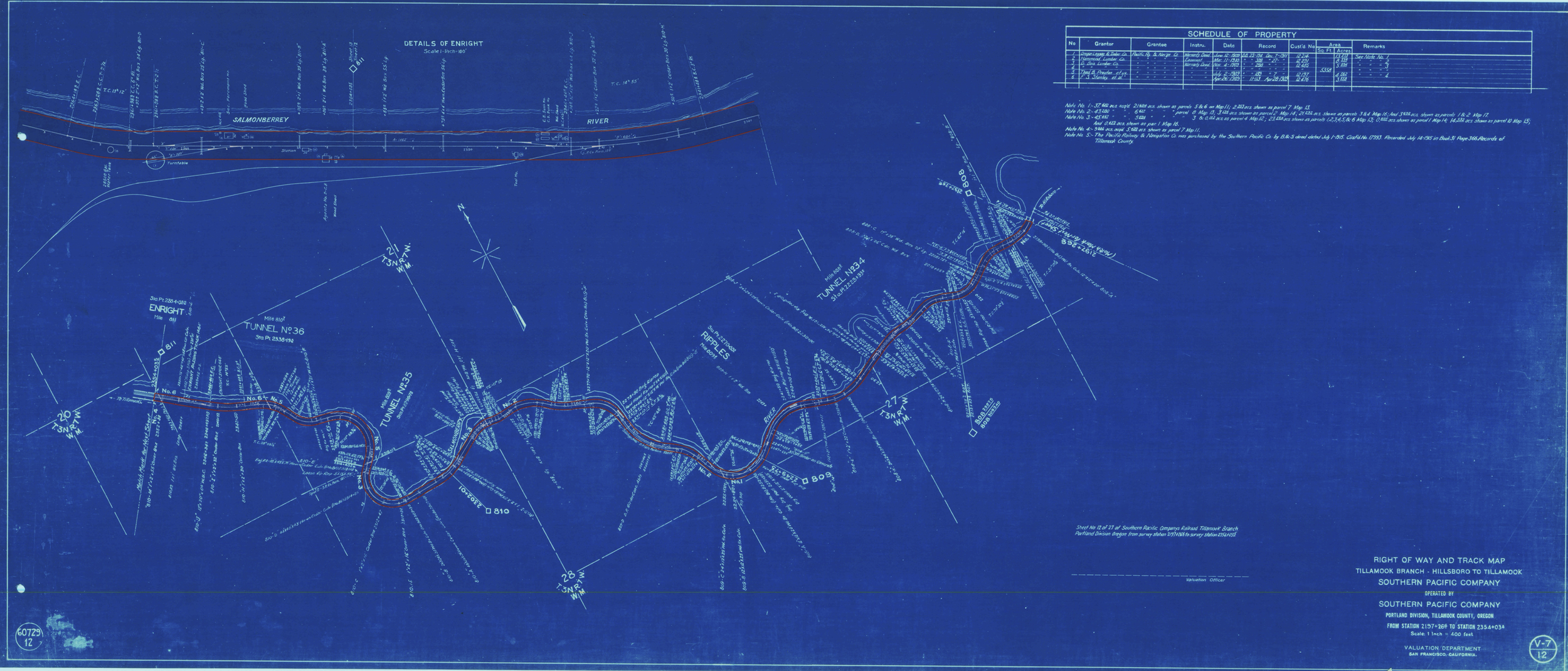
Deep in the Salmonberry River Canyon, Enright occupies a rare stretch of level ground along the historic railroad corridor. For decades, this isolated site supported trains, logging operations, and the small community that grew around them.
Today, Enright could serve another important purpose: helping make the Salmonberry Trail possible.
The property remains privately owned and is not open to the public. By raising $670,000 to secure it, we can preserve an important historic site and establish a strategic foothold for the future development, stewardship, and safe operation of the trail.
A place built around the railroad
Enright developed at Southern Pacific milepost 811, near the bottom of the steep railroad grade toward Cochran.
A 1925 railroad timetable shows that Enright was much more than a name along the tracks. It was a scheduled passenger stop and train-order station with telephone service, water, a turntable, and a siding that could hold 25 railcars. These facilities helped the railroad move trains through the Coast Range's demanding terrain.
Logging operations also used Enright as a camp and transfer point. They brought timber down from the surrounding mountains and loaded it onto mainline railcars. Cabins and a cookhouse housed railroad and logging families, and an Enright post office operated during portions of the 1930s and early 1940s.
By 1960, passenger service and the turntable were gone, but Enright still had water, telephone service, and a 32-car siding. The site remained part of the railroad until storms severely damaged the line in 2007.
Remnants of that history—including cabins, water tanks and railroad equipment—still survive.
A much older history
This place's history did not begin with the railroad.
The Salmonberry watershed is within the ancestral homeland of the Nehalem-Tillamook people. For generations, Native families traveled through the river valleys to fish, hunt, gather plants, and maintain relationships with neighboring communities, including Kalapuyan peoples east of the Coast Range.
Disease, land loss, and federal removal policies caused immense disruption. Nehalem-Tillamook descendants remain part of living Tribal communities today, including the Confederated Tribes of Siletz Indians and the Confederated Tribes of Grand Ronde.
No named Native village has been documented at the exact Enright property. Its history is best understood as part of the broader Indigenous cultural landscape of the Salmonberry and Nehalem watersheds.
Why Enright matters to the trail
The Salmonberry Canyon is one of the most remote and challenging portions of the proposed 82-mile trail. Road access is extremely limited, the river occupies much of the canyon floor, and steep slopes leave few places suitable for trail operations.
Enright is different.
The former railroad siding created approximately 1,200 feet of widened corridor through a relatively flat area. Its location between the central canyon and the confluence of the Salmonberry and Nehalem rivers makes it strategically important to the trail’s eventual development.
Securing the property would create opportunities to:
Preserve surviving railroad and logging history.
Support future trail construction and maintenance.
Improve emergency response options in an isolated section of the canyon.
Provide space for trail operations and stewardship.
Evaluate future visitor facilities, interpretation, or backcountry camping through a public planning process.
Protect an important link in the continuous Salmonberry Trail corridor.
Purchasing Enright will not open this section of trail immediately. It will give the Salmonberry Trail community something essential: a secure place from which future work can proceed.
Preserve the past. Make room for the trail’s future.
Places like Enright are difficult to replace. Once this property is secured, we can care for it as part of the larger Salmonberry corridor—connecting people with the region’s railroad history, natural landscape, and living Indigenous history.
Your contribution will help raise the $670,000 purchase price and move the Salmonberry Trail one important step closer to completion.
Every contribution helps secure Enright for the future Salmonberry Trail.
Historical sources
The historical information on this page is drawn from Southern Pacific and Port of Tillamook Bay Railroad employee timetables; the Oregon Parks and Recreation Department’s 2021 Salmonberry Trail River and Canyon Segments Final Plan Report; Oregon post office records; federal records concerning the Buck Mountain Logging Company; Tribal histories published by the Confederated Tribes of Siletz Indians and the Confederated Tribes of Grand Ronde; and the Oregon Geographic Names account of Enright.